via Instagram http://ift.tt/1HkH2eW

Originally posted on LPP’s blog, Beyond The Hype.
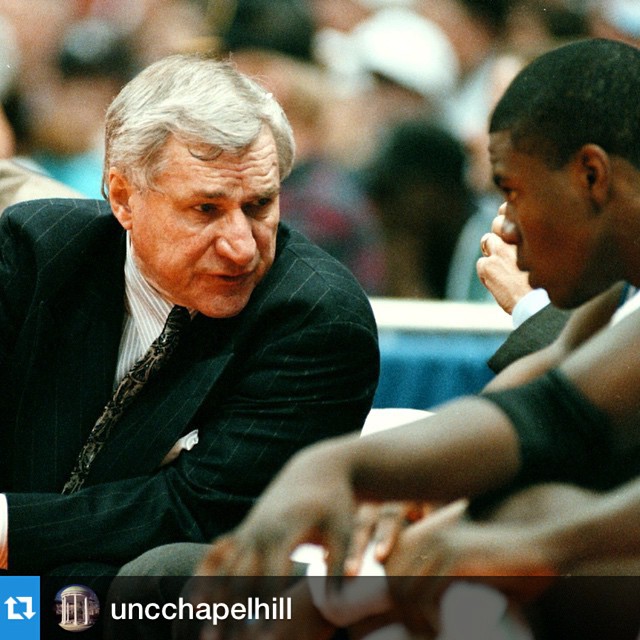
Tonight, the UNC Tar Heels will take on the Wisconsin Badgers as a part of the Sweet 16. Now, I’ve been a Tar Heel for a long time (over 10 years) and have watched my team in many #MarchMadness battles. But this year is a tad different, it’s the first time I created a bracket that didn’t put UNC as the tourney winner.
Okay, okay – all you hardcore madness fans, I know the cardinal rule of bracketology is to complete with your brain, your research and not your heart. But how many Tar Heels out there can put our Carolina blue hearts aside this time of year? My assumption from my time there, not many.
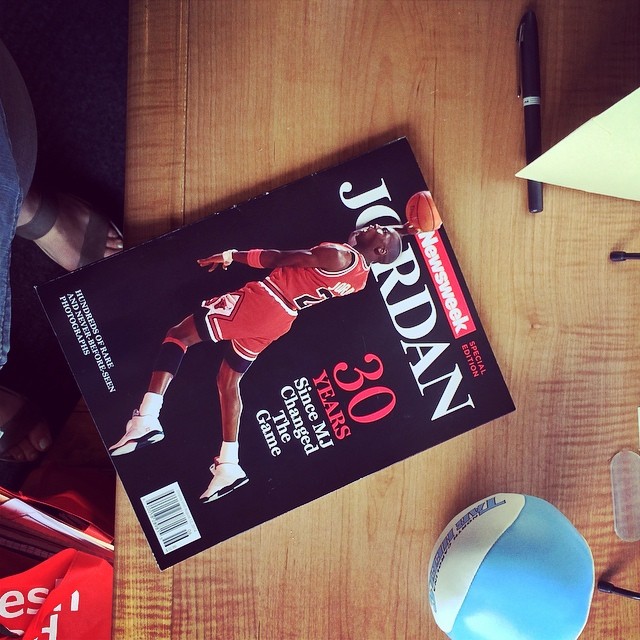
I filled out my bracket with an empty soul, my eyes devoid of NC and somehow filled with ISU (and let’s not even talk about how that worked out for me). But tonight, UNC will face a #1 seed, rocking some awesome kicks and, hopefully, proving my bracket wrong.
So what does any of this have to do with PR? Aside from needing to get this off my chest, it reminded me of the importance of heart, of intuition, being unpredictable but also being stable. March Madness is, in fact, the opposite of mad, it’s a celebration of passion and heart and all the possibilities that come along with those things. And, for some reason, when I filled out my bracket this year, I did so with research and statistics and I forgot to create a bracket based on my gut, my emotion.
And I think that’s why it makes sense to talk about on a PR agency blog and, more specifically, the LPP blog. Now, don’t get me wrong. Statistics and well-developed content based on research and trends are the basis of most everything we develop. But, that bracket I filled in, NEVER would have left this agency. My coworkers would have looked at me, looked at it, and looked back at me asking, “Do you really believe in this?”
And my answer would have inevitably been, “No.”
This answer would then take us back to the drawing board. Why? Because we’re a team of people who make decisions based on energy, passion, what’s right, never what’s easiest and definitely not because everyone else is doing it.
We’re an agency filled with heart. An agency that’s never scared to trust our intuition, in fact, it’s that burning opinion that’s fostered here. And it’s what we hire for. People with opinions. With guts. With emotion. And, because it’s PR, people who can communicate all of those both internally and externally for our clients.
Quite honestly, it’s March Madness here all year round. And we’re looking for players who are ready to be a part of a sincere and passionate team. A team that’s not afraid to go up against a #1 seed, and certainly not scared of some little ol’ badgers.

Okay. I always saw it as black and blue. In fact, I have no idea how anyone else saw that dress any other shade. But, my cones & rods aren’t the point here. The virality that was #thedress had all of us (who aren’t hidden under a rock) scheduling eye doctor appointments. All of us except for the Salvation Army, who used the dress as a chance to spread awareness about domestic violence:

Now generally the response to their campaign was positive. It’s a topic that needs to be talked about. But, something about it put me off. I wasn’t immediately sure whether I agreed with it. But I knew I felt something. And as I talked with a colleague, it reminded me of a very simple content principle:
Three R’s: React, Resonate, Recall.
One I learned first hand in research I conducted years ago on these Australian anti-drunk driving ads:
Try to watch that and not react.
We tested the difference in reactions between these drunk driving PSAs by the TAC (drink and drive and people get hurt) and the American very pragmatic approach toward drunk driving PSAs (drink and drive and get a ticket). The results were pretty astounding.
The people who watched the Australian PSAs reported having stronger opinions regarding drunk driving than respondents who watched the American PSAs almost without fault. And if you watch that video, you’ll notice that the PSAs also had a huge effect on the amount of lives lost due to drunk driving since they began 20 years ago.
So what’s the point? The point is the reaction. It’s all about the reaction. Whether it be a smile, a laugh, a tear, a gasp, and in this case, probably all of the above, it’s the reaction that triggers memory. It’s your strong response that allows you to remember the experience, make associations in your brain and then recall the information later. And that’s why a PSA with such a strong message actually gets results.
Now we can’t attribute everything to an ad, or a tweet for that matter. But what we can surmise from this is the powerful effect or contribution that advertising, messaging, brand perspective and storytelling can have on a society when it’s relevant – yet another ‘R’ to add to the mix. Can every campaign we create elicit this same level of emotion? I’d argue no, it can’t. But is it something every brand should strive for? Absolutely.
And if you want to strike a chord that resonates and people recall later, with an eventual goal of increased awareness and, dare I say, increased sales or brand lift, you have to think strategically about the types of people you want to react, how, and how it aligns with your brand.
Your goal can’t be to make someone laugh. Well, it can be…if you’re a comedian. But the real genius brand content is the content that elicits a laugh and evokes a memory that can easily be re-associated with your brand, or your brand’s message. Otherwise the emotion will pass, and you will have lost your moment to make a lasting exchange with your audience.
So, back to #thedress takeover. My first reaction to the Salvation Army tweet and campaign was negative. I felt it in my gut. Black and blue used in that way disturbed me. But that was the point. And that’s the genius of it. The entire campaign was designed to shock you. But shock you into awareness around something that we all try our hardest to ignore. And guess what, we’re talking about it. We’re remembering it. And we’ll recall this later, I promise.
What are your favorite examples of content that makes you react?


Originally written for Search Marketing Daily, published here.
Thanks to Taylor Swift we know for sure that, yes, haters are gonna hate. But I’m pleading with you, don’t hate on Valentine’s Day, especially if you’re in marketing.
I will hand it to you, Valentine’s Day definitely has a commercialized aspect to it – a “Hallmark holiday,” as one of my colleagues referenced it the other day. But I remember a Valentine’s Day that’s all about hope, passion, and displays of appreciation, placing importance on making those you care about feel wanted, loved and connected.
Okay, I’m sappy. I know it. And, no, I don’t think red roses are mandatory for healthy relationships. But what is mandatory is emotion – tapping into someone’s heart and pulling out happiness. And just as positive emotions and connections are the keys to healthy relationships (marriages and friendships alike), they’re also the keys to great marketing.
Why? We receive more marketing messages today then ever before. Marketing is everywhere, it’s in our video streams, our email, on our phones, I’ve even seen it on my cup o’ joe. And, according to the most reliable study I’ve found on this topic, we see about 360 ads per day. But there’s a finite amount of data that our brains can actually pay attention to, which means we end up ignoring 10,999.950 bits of data every second we are awake.
“Anyone can catch your eye, but it takes someone special to catch your heart. ”– Unknown
Marketers can’t rely on just getting someone’s attention anymore (if we ever could). We have to engage people, build relationships with them, pull at their heartstrings. When a campaign isn’t targeted or specialized or doesn’t consider the actual person on the other end, it just becomes noise – another bit of data to ignore.
And with each new generation this is becoming more and more important. We’re all looking for ways to make our choices both easier and more informed. And that’s what’s influenced the rise of brand loyalty among younger generations.
48% of people between the ages of 18-44 report that any loyalty they feel toward brands in the future will be determined by the types of experiences brands create for them (Analytic Partners).
And how do you create meaningful experiences? Being vulnerable, or in business terms, being transparent. Being considerate. Creating content your audience actually needs. Investing empathy and thought into each message you put in front of someone. Making bold moves and creating special moments. And that’s the entire spirit of Valentine’s Day.
So, before you hate…appreciate. Take a moment this Saturday to appreciate your employees, appreciate your customers. No, you don’t have to send them a Valentine’s Day eCard (though I really enjoy them, especially those with great subject lines). But you can take a moment to evaluate your content strategies. Evaluate your marketing plans from your customer and prospective customer’s point of view.
And next week as you return to work, start making the changes you need to ensure that every part of your marketing mix screams “BE MINE!” Ensure that every tactic works toward creating lasting impressions, forging new relationships, and creating experiences. No one can ignore that approach.
P.S. Happy (belated) Valentine’s Day!



In a recent post, I introduced the reasons why LinkedIn Publisher & Pulse should be a part of your 2015 content marketing strategy. Once you’ve got great content and you’ve decided to leverage LinkedIn Publisher, though, you need a few rules of the road to help get maximum impact. Because who wants to spend all that time on a great article, if no one sees it?
10 LinkedIn Publisher Best Practices for Maximum Impact:
With these best practices in your back pocket you’re ready to starting LinkedIn Publishing!!
——————————-
Quick How-to on actually publishing your first LinkedIn article:
To publish your first article, click here (https://www.linkedin.com/today/) then click on any article.

Then, click on the little yellow box in the top right corner that reads “Write New Post.”

Once you’ve create one post, you can then view, edit and create more posts on your LinkedIn Profile page, they’ll appear right underneath your contact information.

When you click on the “Write New Post” button, you’ll be taken to a page where you can write a new one, edit an old one, etc.


I’ve heard it time and time again from clients, and I’ve even considered it myself, what’s the ROI of this blog post? Is it worth the time creating it, when I could be finishing my laundry? And while we’re all trying new innovative ways to drive traffic to our blog in order to answer this question, we’re finding that the number of blog views isn’t always the best indicator for success, (nor is leads generated).
Rather it’s the quality of the people who read it, the impressions they’ve drawn and their importance to you or your company. And, we get it, more traffic increases the likelihood of getting quality views. But, really, it only takes one important prospect reading your post to justify its ROI. So how do you ensure that both important and relevant people read your blog post? Two answers: LinkedIn Pulse & Publisher.
LinkedIn Pulse has been around since earlier this year, and it recently opened up its Publisher tool to everyone. Now there have always been concerns about LinkedIn’s actual relevance for marketers – LinkedIn’s UX has taken more than one attack, LinkedIn Groups are a bit lackluster when it comes to providing genuine engagement, and many see the network solely as a recruiting and job searching tool – however, with LinkedIn Pulse and the new Publisher tool, LinkedIn has moved to the top of our must-use content marketing tools list. Here’s why:
So, now that you’re convinced. How should you get started and what are the best practices for using LinkedIn publisher? I’ve got that covered – 10 Best Practices for Maximum Impact with LinkedIn Publisher.

Times are changin’ – literally and figuratively. Yes, we’re moving into 2015, switching over our calendars and preparing ourselves for another countdown. But the countdown we should really be paying attention to is the countdown to a very, very new Facebook (at least where marketers are concerned).
We’ve talked about this before – organic reach on Facebook (and soon other networks) has already decreased for most brands. But in January, Facebook plans to make an even more substantial change to its algorithm (not EdgeRank anymore), significantly decreasing organic reach for any Facebook content that is deemed as promotional in any way. If it looks like an ad, smells like an ad, reads like an ad, you’ll have to pay to ensure that users see it starting in January 2015.
Here’s the deal. Facebook reports that an average of 1,500 stories are generated each time someone logs in. Of those, a user’s Newsfeed only displays around 300. And its algorithm is the deciding factor as to which stories you see – it filters based on factors relative to what each user likes, their clicks, articles they’ve commented on, etc.
And recently, via a user experience survey, Facebook found that users wanted to see more stories from friends & pages they care about, and less promotional content. This didn’t mean ads, though. This meant salesy posts from the pages users already “Like.” So in response to this, Facebook has rejiggered their algorithm to filter out any “overly promotional page posts.”
Facebook constantly makes updates to its algorithm, however this recent change is one of the most substantial updates they’ve made so far. In effect, Facebook is forcing marketers who often use the network as a means of promoting their contests, new products and events, to spend money on ads, if they want these messages to be seen (even by their existing followers).
And, not only does Facebook want to control how & how many promotional messages users see, but they also want to control who sees them. If someone is going to see a promotional message, Facebook wants to make sure that it’s marked as such AND that it’s shown only to users who will find it highly relevant. And the only way to do that, is by paying for an ad and selecting a very specific target audience. In theory, the more hyper targeted your ad’s audience, the more relevant the ad creative can be, the higher the engagement rate, and the more satisfied Facebook users will be.
This is certainly great from a UX perspective. But for marketers, this means more money, more creativity and, our favorite, more time. And we’re a little suspicious of Facebook’s actual motives i.e. Facebook is likely looking to get rich quick (or wait, have they already done that?).
Okay, so what’s all of this mean for YOU?
This is a lot to take in. Facebook and the constantly changing world of social media can be a bear. Fortunately brands who are already leveraging paid social will have a little easier time making this transition. They’ll just need to review their ad creative and optimize for the highest engagement rates and be sure not to post any ads to their wall as organic posts.
But for marketers who have yet to explore the world of Facebook advertising, this may take some ramp up time and potentially some consultation with someone who knows the ins and outs of paid social.
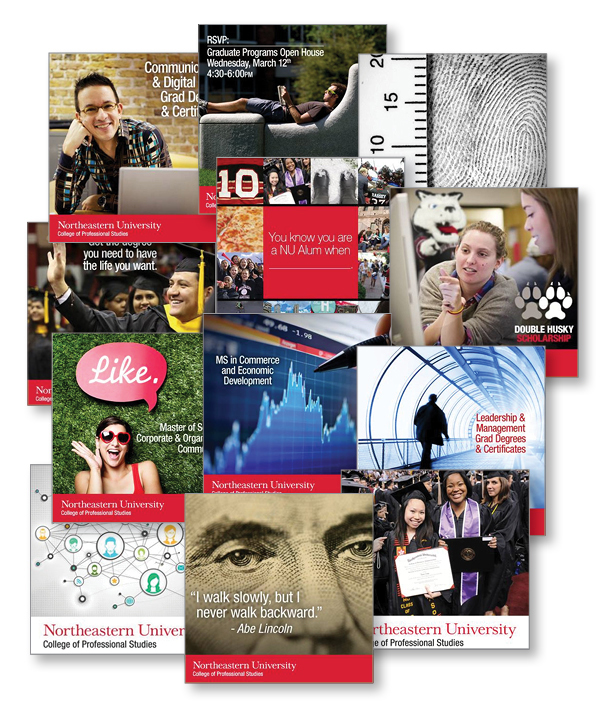
What started as a few Facebook ads for Northeastern’s College of Professional Studies became something so much bigger. Northeastern CPS’ entire strategy depends on lead generation. So in addition to advertising in targeted verticals, we recommended using some newer tools to generate leads and hyper target based on the individual programs. In order to do so, we created best practice document after document. We made a case to go paid social. And it “paid” off!

Can you believe it’s almost the end of 2014? It seems like a minute ago we were planning for a long Summer and now, here we are, well in the midst of FY2015 planning.
Arguably the hardest time to plan for the new year is toward the end of the year before. It’s the holidays, people are out, people are sick (crossing fingers!), and budgets are like mythical creatures looking for confirmation they exist.
With all that, the question quickly turns to, “How can you make a lull period a super productive period?” Our recommendation: A Social Media Audit. We specifically recommend taking this time to do a little dirty work for the greater good of your social strategy.
We see far too many brands moving forward with fresh social campaigns that are grounded in nothing more than their own experiences OR (and arguably worse) their campaigns are exact replicas of a competitor’s strategy. And while it’s exciting to embark on anything new in the digital space, often the post-campaign reports that correspond with these efforts are less than scientific:
“We got more followers!”
“People really liked what we did!”
The key to making a social media audit an effective use of your marketing budget is to make it useful and actionable. So many times we see companies develop audits but then never do anything with the results from the audit itself. That may satisfy someone’s curiosity, but it won’t do much more.
So, if you want a report with actionable insights and a strategy grounded in research that really resonates with your audience, you need to do a social media audit right.
To ensure success, the components of an audit should vary slightly based on your own 2015 goals, but there are 7 elements that make for a truly actionable social media audit:
Together, these seven components will help arm your team with the information it needs to develop a social strategy for the coming year – or even just the next quarter. And this also serves as a nice benchmark report to draw comparisons over time and to discover how your brand is improving (hopefully!) versus the rate at which your competitors might be improving.
Now, go forth and audit. And, of course, if you’re interested, we can help!

My sister and me in a pre-smartphone Thanksgiving.
There are quite a few ways we like to think about how Thanksgiving began. Some versions are warm and fuzzy. Others are down right disappointing. Regardless of what you believe, or choose to believe, or choose to disregard, it’s what Thanksgiving is about now that’s most relevant.
For many of us the holiday is symbolic of our human need for community. Our need for human interaction and celebration, with a little sustenance thrown in for good measure.
I remember when Thanksgiving really was just that. A day full of cooking, laughter, hugs, watching the Macy’s parade, watching football, sleeping, eating, eating again – We’re sure you all know the drill. It all revolved around not just being together, but also being present.
But in today’s modern world Thanksgiving has become very, very different. Not necessarily for better or for worse. Just different.
We’re all there, but are we really all present?
Now that we have cell phones, well mini wifi-enabled computers, we’re hyper in touch with the digispace, but sort of out of touch with face-to-face. We know we rely on our phones to get us through the day. We pull it out to get a recipe. We may pull it out to tweet a #turkeyselfie, facebook, or google search to end an argument. We pull it out to constantly refresh our inboxes, check in on work projects, and worst of all, to shop (no more waiting for Black Friday, the deals start on Thanksgiving day people!).
It’s a lot. It’s so useful. So functional. And it has certainly made Thanksgiving dishes substantially better (TY Food & Wine app!). In fact, 44% of recipe searches came from mobile on Thanksgiving Day last year, and it’s already trending higher this year.
But, I still find myself thinking about the Thanksgivings we enjoyed pre-smartphone. Somehow I wasn’t bored, the food tasted just as good, and I felt relaxed. I have very vivid memories of live conversations, endless games of pass the pigs, and “accidentally” adding too much rum to the rum bread pudding.
So…what would it mean if we got rid of our smart devices for the day? If we turned off our phones <gasp>, turning down our digital connection and turning up our in-person, in-the-moment connection?
I’m not sure how it’s going to go folks, but I’m doing it. And I’m challenging you to do it too.
Tell me how it goes (the day after obviously!) with #TurnDownForTurkey!

Recently I saw yet another case of a social media “campaign” campaigning for something completely the opposite of its original intention.
Dr. Oz’s social media team set out to solicit health questions from his 3.58M followers. An idea that seems harmless, well helpful really.

And it was helpful…for some.

But for most…it was just humorous…

Long story short, it got a little out of hand.

And there are plenty, plenty more.
Now, I’m not here to re-hash the Dr.Oz story. But I am here to ask, was this preventable? And if not, what does that mean for social engagement strategies? And, how do you respond when your hashtag is taken over?
Those are some pretty lofty questions. But in my experience, I’ve found that honesty, trust, and transparency are the keys to getting through or preventing something like this from happening. It’s happened before (remember Bill Cosby Memes gone wrong?) and it will happen again.
And this is precisely what scares big and small brands alike from trying to actively engage with people on Twitter. The problem is, interaction is what Twitter is meant for. You can’t go around it. You can’t go over it. You can’t go under it. You have to go through it. It’s the only way to get to the other side of the Twitter success and karmic bliss.
There will always be risk. But there are steps you can take to mitigate that risk:
RULE #1: NEVER IGNORE & ALWAYS PARTICIPATE
Check out Dr.Oz’s Twitter feed. There is nothing, nada, zilch in response to this hashtag takeover. If you’re going to be on Twitter, you have to actively participate. You can’t ignore conversations, and you especially can’t ignore the 254 tweets (according to Topsy) that you solicited with your ostensible “Q&A.” Let’s face it, there’s no “A” happening here, except for the “A” that stands for “Avoidance.” So, responding is a must. And when you do…
RULE #2: BE HONEST & PROACTIVE
The collective vent session via #OzInbox is the result of quite a few publicly harmful tidbits provided by a licensed doctor. Something Dr. Oz has never spoken out to apologize for or even defend. We get it…Things happen. You will say things that wish you had never said or things that will come back to bite you (and probably somewhere you really, really don’t want to be bitten). If you don’t proactively nip this kind of stuff in the bud by giving your own HONEST and transparent response, then when your attempt at engaging via a Q&A will likely garner the same results as Dr.Oz’s. People will use it as a chance to converse with you finally. And this conversation will, most likely, not be good. Consider the Renee Zellwiger new face controversy a few weeks ago. Twitter was abuzz about her supposed plastic surgery and her response was perfect. What happened after? People gave her kudos and moved on.
RULE #3: FOSTER CONVERSATION AS A HABIT, NOT AS A ONE-OFF.
It’s disingenuous to begin a conversation for the sake of engagement, with no intention of actually engaging. You can’t post a Q&A that sits among several other auto-scheduled tweets. If you are going to participate on Twitter, make sure you participate as often as possible. As often as regulations allow. And, as often as the industry demands. If not, when do you post a question, it will seem coerced – like something your social team developed, without fully thinking it through. And that’s frustrating to everyone, not just social media nerds like me.
RULE #4: BE READY.
No matter what the conversation is that you’re trying to start or be a part of, be ready for anything. Have responses ready. Know your brand personality and use that to drive how you participate in the conversation and how you might respond to any negativity. Check out Taco Bell for instance. Its brand personality is snarky. So it tweets that way and it responds to conversations and mentions whether they’re positive or not:

Now, not all brands can be Taco Bell. But they can be creative and true to their brand. If that means needing to create conversation guidelines and examples, do it. If that means having one creative and conscientious person man your feed, than do it. This is how you prevent negativity and come out on top.
The morale of the story is this: the only way to prevent negativity is to be there and be prepared, always. And to recognize that when you’re playing in the conversational, two-way, two-to-many world that social media has created, you have to have to have to interact and you have to expect the unexpected. Otherwise, the consequences could be dire.
How do you plan for Twitter crises or foster engagement on Twitter?
 Though paid social has been around for a while, right now we’re experiencing a real boom in its global acceptance across industries. It may be the shiny, new ad products or (and more likely), it’s because we’re finding that paid social ads work, especially Twitter ads.
There’s a whole army of social ad types including: LinkedIn Sponsored Updates, Promoted Facebook Posts, YouTube Video ads and Twitter Promoted Tweets (Instagram ads are in the pipeline as well as Promoted Pins on Pinterest & Promoted blogs on Tumblr). However, as is often the case, with more options comes greater confusion, which can ultimately paralyze a brand from using any paid social at all. Or worse, to use some paid social haphazardly without reaping the full benefits. Which is why we’ve been getting more and more inquiries from our clients about how best to leverage paid social.
Choosing a social ad type should depend on the answers to the following questions: Where’s your target audience? How do you want to engage with them? What are your goals?
Because of its ubiquity and conversational manner, we are actually pretty partial to Twitter’s ads products. And there’s one more important reason we include them in our recommendations: Promoted Tweets are actually proven to convert more prospects than organic tweets – yep, Twitter ads were more than twice as likely as organic tweets to convert users (Convertro 2014).
Why is this? Twitter has a unique combination of targeting, timing, and ad unit options that are both engaging and effective.
In addition to the normal demographic, location and device-based advertising, when we target with Twitter, we’re also able to use strong relational and interest-based targeting. We’re able to target users based on hashtags, interest categories, the Twitter handles they follow, etc. We can even upload our own list of prospects to either include OR (and this is new) exclude. And, if you use Sysomos or SimplyMeasured, you’ll soon be able to target users by the specific keywords in their Twitter bios or based on things they’ve tweeted about in the past 30 days. So as long as you’re smart about what you advertise, to who and when, you can easily create something very relevant using Twitter.
This is especially so, because of the amount of ad units available. Twitter gets it. They know brands need to be able to justify media spends with clear metrics. Depending on your objective, you can usually find a Twitter ad unit that allows you to reach a goal AND to engage–convert & converse! And isn’t this nice – we’re here to help you navigate through them. Here are a few of Twitter’s ad types and best practices:
Promoted Tweets
If a brand is looking to engage with its target audience, increase its followers, and create a conversation, Promoted Tweets are the way to go. These tweets appear in a user’s timeline, in search results or in a user’s Hootsuite dashboard, and can contain images or links. The best way to use them is by including great stats, quotes, promoting new blogs or articles you’ve created, or simply by participating in a Twitter chat.

Promoted Account
An offshoot of the Promoted Tweet, Promoted Account ads allow brands to get their Twitter handle in front of a specific target audience AND, in conjunction with a tweet, make a case for why a user should follow them. Users see these ads in the “Who to Follow” area and the tweet appears in their timelines. Promoted Account ads are very successful when done alongside traditional Promoted Tweet campaigns and really do result in high new follower counts. The catch? You have to engage with those new followers ASAP. Give them content they want to consume, or you’re very likely to drop off their radar.

Lead Gen Cards/Website Cards
Oh how we love Twitter Cards! Introduced a little over a year ago, Twitter’s Lead Gen Cards allow advertisers to showcase an offer, a piece of content, a registration, really anything in exchange for that user’s information. And it all happens with the click of a button. Lead Gen Cards appear as a link within a tweet and upon click, expand into a user’s timeline. Once a user clicks to claim your offer or read your white paper, Twitter automatically collects and provides their twitter handle, name and email address. You can even have this information automatically imported into your CRM so that you can follow up with an email. Post-click users are then directed to a custom landing page of your choice.
When to use these? Well if your goal is to generate leads it’s an obvious choice. But it’s also great if you have pieces of content you know your target audience would love to read OR if you have a great discount to promo.
Recently, Twitter also unveiled Website Cards, which are similar to Lead Gen Cards, except the offer is always your website or landing page. Good to use if you have a game or something experiential on your landing page to provide users.

Promoted Video
Still in beta, Twitter’s Promoted Video ads will be available as a self serve option for all brands soon. These are done on a cost-per-view model (vs. cost-per-enagement for the other ad units) and streamlines video playback with a one-tap viewing experience. These ads create an even richer sense of engagement with your target audience. An average Promoted Tweet costs anywhere from $1.50-$3.00 (depending on audience size). So if Promoted Videos stick to the standard, brands could also use these as a way to test out various videos before launching with larger online video or even TV strategies.

Promoted Trend
Last, and most expensive, is the Promoted Trend. This was Twitter’s earliest ad unit, as it places your hashtag in user’s trending topics area. However, from our experience promoting a trend for just one day can cost you $15,000! And you would be remiss if you promoted a trend without using Promoted Tweets and Promoted Account ads in conjunction. So, you’re likely going to exceed $20,000 for just one day of exposure. And you have no control over the other trending topics your hashtag might be showcased alongside.
However, if you’re looking for mass exposure, Promoted Trends are the way to go. These are great when used to enhance other large PR announcements to exponentially increase impressions and awareness of this news.

For more information about Twitter’s ad units or other paid social media efforts, feel free to contact allie_rees@lpp.com.

 As social lovers and marketers, we all knew there would come a time when our favorite social platforms would find themselves answering to their investors. That’s just the way it is.
And now, unfortunately, things will never be the same.
(At least where organic vs. paid social is concerned.)
Last week Twitter announced its intention to filter user’s Twitter Feeds. In effect, choosing the content that does and does not get seen by each user. There are two schools of thought around this:
But if Twitter does decide to create its own algorithm (much like Facebook’s EdgeRank), no content is guaranteed to make your feed, especially if you haven’t interacted with a tweet from a particular user in a while.
Twitter is doing two things here. It’s addressing the information-overload complaint from average users while also forcing brands to amp up their efforts by using their paid options. Promoting your tweets will eventually be the only way to make 100% sure that your followers see your content, not to mention reaching your potential followers.
After a change similar to this on Facebook, AgoraPulse and Mark Schaefer found that more than 70% of all companies across 104 industries had a decline in organic reach of 30% or more. And while the question on whether the brands are to blame for their decline in reach is still valid, the hard truth is that Facebook’s algorithm change has led to a very steep decline in organic reach and engagement rates across the board. And this same trend will likely rear its ugly head on Twitter as well.
The answer: dollars.
Innovation and relevancy have always been the pathway to success on social. But the almighty algorithm is driving the need for brands to invest in not only great content, but also in sponsored and paid social advertising – especially, if they want to see their social programs succeed.
 The good news in all this is that paid social ads actually have proven to achieve higher conversion rates than organic content (via emarketer 2014 Q1 study). Especially on Twitter, where ads were more than twice as likely as organic tweets to convert users.
So now, the questions will not be, should I spend money on social ads? Rather how much, when, and why?

How many apps does it take to post one picture to Instagram?
Actually, with the recent launch of Hyperlapse, the question should probably be:
“How many apps does it take to post one video to Instagram?”
The answer: more than one.
Hyperlapse, the newest social media one-hit-wonder, is an app that helps shaky cam holders stabilize their videos and allows average users to create time lapse videos. Hold applause.
It’s an amazing app. Believe me, I’ve played around with it already:
But, do we really need another app?
Don’t forget that to post images on Instagram, people are already going to some “extreme” lengths. For example, want to combine multiple images? There’s an app for that (well lots of apps for that). Want to “re-gram” an image posted by another user? There’s an app for that. Want to create a time lapse video? There’s another app for that, too.
And now, instead of incorporating these already-existent technologies and this amazing new video technology into its native platform, Instagram has added to the app-mania with yet another step for users to take pre-post.
Maybe Instagram has taken a little advice from its parent, Facebook, which just launched a new messenger app, separate from the normal mobile Facebook experience. And we can’t forget about Paper, the Facebook stories app that launched and then…wait, what happened to it?
And then there’s Vine, which just made some major updates to its video capabilities – namely adding the ability to import multiple videos to one Vine. A capability Instagram doesn’t currently have.
So, with the mega-millions of apps, how do we, as advertising and PR pros, decide which ones will stick? And more, how do brands decide which new apps to leverage – considering that the quicker you are to the game, the greater your potential following usually becomes.
Experience and intuition.
We’ve experienced the hype associated with google plus (which still exists, but for very different reasons other than traditional user engagement) and we know not to trust everything that’s shiny and new in the digital space.
We trust our intuitions and consider the app-implications (excuse the play on words). Will the masses use it? Maybe not. Will professional bloggers, videographers, agencies, big brands, foodies, fashionistas, who care first and foremost about quality, use Hyperlapse? You bet.
As for brands, trust your gut. Think about whether you have the resources (internally or via an agency) to experiment and to add another step to your posting process. Or at base line, determine if you have enough storage available (GB) for yet another app! If the answer to all is yes, then go for it. Just make sure to download the correct app…you wouldn’t want to pay $0.99 to download the Hyperlapse app by Google.
Have/Will you download Hyperlapse? Tell us why…




Incorporating social media into your nonprofit event, or any event for that matter, is a great way to build relationships with your audience in a comfortable format. It’s also a great way to ramp up an event and keep the conversations alive after everyone goes home.
But, being truly engaging with live events means more than slapping a hashtag on an invite. In order to really get the most out of your event, and to encourage conversations and excitement among attendees, there are a few things to consider:
What are some of your must-do’s for live events?
Considering the videos you watch on YouTube, you might not think that it’s the right place for B2B companies to communicate. Isn’t it for videos of cute kittens and babies? But as online video consumption increases, YouTube is becoming a top online destination for everyone, including the B2B industry. Increasingly, video is proving it can engage users much more than any other medium, no matter who they are.
Why should B2B marketers use YouTube?
YouTube has evolved over the years from a novelty into a mainstream method for executives to receive business information. In fact 75% of executives watch work-related videos each week (Forbes Insights). Studies show that decision-makers increasingly want to watch, not read.
You can probably draw from your own experience. How many times have you reverted to YouTube to learn more about a company ? Or to learn more about some business-related subject matter?
B2B companies often have involved concepts and processes that are hard to explain with text. A dynamic video can explain these much more efficiently and in a more captivating way than a long text-filled web page.
Not only will executives appreciate the brevity and ease of a video that can spark their interest, but they’re also apt to share it with their colleagues. Younger execs, in particular, are more inclined not only to view video but to also create and share it over the business-oriented social web. The more your videos are shared, the greater the likelihood that other people will watch it.
If we haven’t given you reason enough to consider YouTube as part of your B2B marketing strategy consider this:
Studies show that people who have seen a video are more likely to convert to a lead.
So, YouTube is not only helping B2B marketers build incremental reach among decision makers, but it’s also helping to engage and convert them. All in all, YouTube is helping B2B organizations sustain long-term customer relationships and carve out potential leads.

Using YouTube has a few other added bonuses:
How to properly take advantage of YouTube & video marketing for your organization?
B2B marketers who use YouTube can increase awareness and preference, demonstrate products, share knowledge, and put a likeable, human face on their company, but it takes a sound strategy in order to do this. This strategy is built by learning what information and content your current and prospective clients are looking for and what they want to know about you. American Express has done a wonderful job leveraging YouTube for their B2B communication needs: Amex Open Forum.
Craving more information? Leave a comment below with your questions or email amwassum@gmail.com for more specific strategic approaches to YouTube as well as information about YouTube advertising!


The first time I heard the term “second-screen viewing” or “second-screen viewer,” I rolled my eyes. Hello…we have been watching TV and eating, reading, doing homework, “studying,” emailing with clients, etc. for as long as the TV tray has existed.
But what we haven’t experienced for decades is the ability to track what viewers are doing while they’re watching. Are they playing Candy Crush and sort-of watching CSI or are they watching The Voice and following the singers virtually as they sing on screen? In other words, are they tuned out or hyper tuned in?
Thanks to social media (and our inherent need to share), we’re now able to pinpoint just how engaging our shows are. And, more importantly, we’re able to capitalize on this engagement with ads.
But just how much second screen viewing is actually happening and what’s the potential for second screen engagement?
In 2012, Nielsen reported that 40% of smartphone and tablet owners used their devices while watching TV. In just 2 years, that number has increased to 80 percent! So as advertisers and “official engagement engineers,” how do we capitalize on this?
Thankfully, technology has given us the ability to track the real-time interactions happening across multiple networks, platforms & devices and associate those with what’s happening on TV. And they’re not mapping back to to the TV guide to determine when something’s airing. It’s way more sophisticated than that – companies like Bluefin Labs (now a part of Twitter) have technologies to determine what’s on TV in conjunction with real-time conversations on Twitter and Facebook.
All of that aside, engaging with TV viewers is now not just an opportunity, it’s a necessity. But what does this mean for advertisers?
How do you engage with brands and/or TV shows while watching the tube?






A few weeks ago I read an interesting study by Business Insider about brands that “get there first” (so to speak) when it comes to new social networks.
They found that there’s a positive relationship between being an early adopter and a brand’s audience size. Basically, the brands who created their profiles on a new social network the fastest also tend to have the most followers.
It makes sense – the longer you’re on a social network, the more time you have to accrue more followers. But, there’s much more to the story for bigger brands.
So how can you compete with these massive brands?
Are you an early adopter when it comes to social media?


Facebook advertising is more sophisticated than it was a year ago, or even 6 months ago. When advertising was first introduced to the platform, Right-hand Side Ads were the only option, but now the options are almost endless (at least with the various types they seem endless!).
Navigating these different ad options can be tough for a marketer to do without a ton of experience under his belt. There are so many things to consider:
To help you more easily choose the right ad type for your specific needs, here’s a rundown of the different ad types and the best ways to use them:

Right-hand Side Ads
Right-hand Side Ads
These are the traditional ads provided by Facebook that allow advertisers to get in front of users who are on their desktop devices. The important word here being…DESKTOP. They aren’t served on mobile devices, so if you’re trying to reach people when they’re on the go, this is not the best option for you. Also consider that at the end of January 2014, Facebook mobile users surpassed desktop users.
Right-hand Side Ads work well as a means of awareness and continuity for the rest of your campaigns – they’re a great way to keep your brand and message top of mind throughout your campaign.
With a platform like AdRoll, you can use Right-hand Side Ads to retarget users and get them back to your website or landing page to achieve higher CTRs and engagement rates.
Facebook Promoted Post Ads – Link & Image
Recently, Facebook changed its algorithm (EdgeRank), making it nearly impossible for brands to appear in a user’s News Feed without serving an ad. So, if you want to make sure your post gets seen, you’re going to need to put some money toward it. The good news is that promoted posts (when done correctly) are very engaging and see low CPCs.
There are two different types of Promoted Posts to use for different purposes.
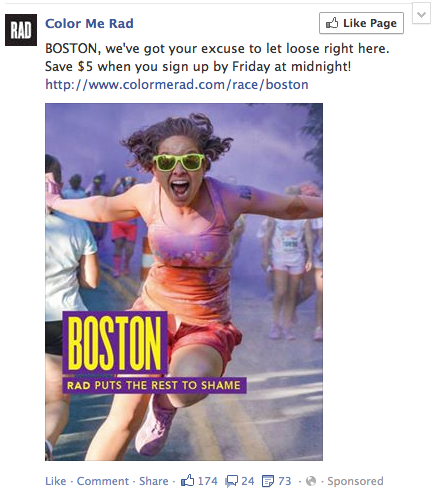
Image Promoted Posts
Image Promoted Posts used to be the only option for Promoted Posts. This was based on the knowledge that users interacted with image posts more often than link or text posts. In fact, photos on Facebook generate 53% more Likes than the average post. So if you’re looking for user engagement in the form of page Likes, post Likes, comments, or shares, Image Promoted Posts are a great way to go.
The one downside to Image Promoted Posts is that you cannot ensure a click to your landing page or Facebook tab with one of these posts. When a user clicks on the image, he or she is taken to a larger version of the picture, not to your website, so there is no way to guarantee that a user actually gets to your site. When bidding on a CPC basis with these posts, you aren’t paying for a click to your landing page, you’re paying for a bigger image view.
The best way use Image Promoted Posts is to increase your Page Likes or interactions with your brand in general, as they garner more shares and Likes (in my experience) than any other format.
Link Promoted Posts

Facebook Link Promoted Post
A month or so after Facebook introduced the new link post format with much larger images, they also introduced Link Promoted Posts. Like Image Promoted Posts, Link Promoted Posts can be served to users on both mobile and desktop devices and are best used for directing users to another landing page or Facebook Tab, because no matter where a user clicks on your post, he will be directed to your landing page. In that vein, if you’re measuring success by the amount of leads your campaign as generated, or entries your contest received then Link Promoted Posts are the most efficient use of your budget.
Facebook has also introduced Cost Per Action bidding, which allows an advertiser to pay only when a user has visited your website or when a user completes some pre-determined action (like filling out a form). In my experience, though, the average cost per action is much higher than your average cost per click AND Facebook will generally serve fewer impressions of your ad because they’re not guaranteed to make as much money off of it.
Page Like Ads & App Install Ads
There are a few other ad types I haven’t mentioned, like Page Like Ads & App Install Ads. As their names suggest, Page Like Ads are used to help you generate more Likes to your page and App Install Ads (allowed only on mobile devices) are used to advertise a new app to user.
The best campaigns use a mixture of all of these ad formats (except for the App Install Ads, which don’t apply to all situations). As they all serve a different purpose, they’re complementary in that manner – Increase awareness with Right-hand Side Ads, increase user engagement with Image Promoted Posts and, further down the funnel, capture a user’s information with link promoted posts.
What other questions do you have about the different Facebook ad types?
I’m more than happy to answer them – just tweet @social_allie.
 Social Allie